1. What is Himalayan Pink Salt?
Question: What is Himalayan Pink Salt?
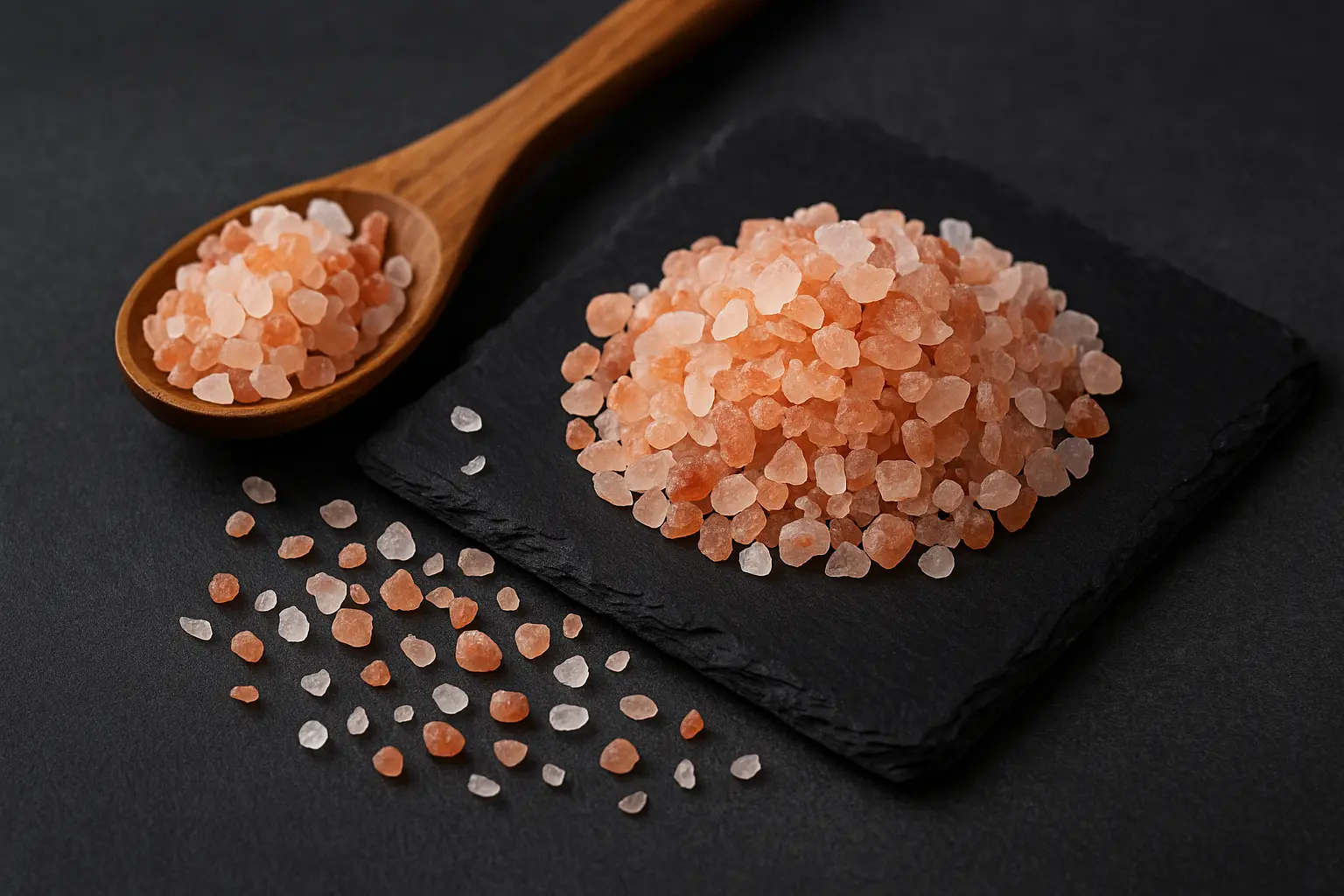
Himalayan Pink Salt is a naturally occurring rock salt, known for its distinctive pink hue, which is attributed to trace minerals such as iron oxide. Mined from ancient sea salt deposits, it is celebrated for its purity and mineral content.
2. Origins and Mining
Question: Where is Himalayan Pink Salt sourced from?
This salt is primarily sourced from the Khewra Salt Mine in Punjab, Pakistan, situated near the foothills of the Himalayas. The mine is one of the oldest and largest in the world, believed to have been formed over 250 million years ago.
3. Mineral Composition
Question: What minerals are found in Himalayan Pink Salt?
Himalayan Pink Salt contains up to 84 trace minerals, including:
- Sodium chloride (≈97–98%)
- Iron
- Calcium
- Potassium
- Magnesium
- Zinc
These minerals contribute to its unique color and flavor profile.
4. Differences from Other Salts
Question: How does Himalayan Pink Salt differ from regular table salt?
Unlike regular table salt, which is heavily processed and often contains additives like anti-caking agents and iodine, Himalayan Pink Salt is less refined and retains its natural mineral content. Sea salt, while also less processed, is harvested from evaporated seawater and may contain different trace minerals.
5. Health Benefits
Question: Is Himalayan Pink Salt healthier than sea salt or table salt? What are the claimed health benefits of Himalayan Pink Salt?
While Himalayan Pink Salt is often marketed for various health benefits, it’s important to note that scientific evidence supporting these claims is limited. Alleged benefits include improved hydration, pH balance, and respiratory function. However, these claims are largely anecdotal.
6. Hydration and Electrolytes
Question: Can Himalayan Pink Salt help with hydration and electrolyte balance?
It contains electrolytes like sodium, potassium, magnesium, and calcium, but in very small amounts. While these are essential for hydration, the levels are not sufficient to replace electrolytes lost during intense physical activity.
7. Blood Pressure
Question: Does Himalayan Pink Salt help with blood pressure regulation?
Like all salts, it can raise blood pressure if consumed in excess. While some claim it’s less harmful due to its natural state, there is no solid evidence that it regulates blood pressure better than regular salt.
8. Digestion and pH
Question: Can Himalayan Pink Salt support digestion and pH balance?
Some alternative health practitioners claim it stimulates digestive enzymes and helps maintain alkaline balance, but these effects are not scientifically proven. The body naturally regulates its pH through the lungs and kidneys.
9. Detoxification
Question: Does Himalayan Pink Salt detoxify the body?
There is no medical evidence that Himalayan salt actively detoxifies the body. Detoxification is a function of the liver and kidneys, not salt. Salt baths may promote relaxation, which can support general wellness.
10. Respiratory Support
Question: Can Himalayan Pink Salt improve respiratory conditions?
Used in halotherapy (salt therapy), it may help reduce inflammation and clear mucus in people with asthma or allergies. However, clinical research results are mixed, and benefits appear to be mild and not universal.
11. Daily Use and Safety
Question: Is Himalayan Pink Salt safe for daily consumption? Can too much Himalayan Pink Salt be harmful?
Yes, it is safe to consume in moderate amounts. However, it has the same sodium content as regular salt, so recommended daily limits (no more than 2,300 mg sodium/day) still apply. Excessive intake can cause hypertension, fluid retention, and other issues.
12. Consumption Warnings
Question: Who should avoid Himalayan Pink Salt?
People with:
- Hypertension
- Kidney disease
- Salt-sensitive conditions …should limit all types of salt, including Himalayan.
13. Cooking and Baking
Question: Can Himalayan Pink Salt be used in cooking and baking?
Absolutely. It can be used:
- As a seasoning during cooking
- As a finishing salt
- In baking, though its coarse texture should be considered
14. Salt Blocks
Question: What are Himalayan Pink Salt blocks used for?
These blocks/slabs can be used to:
- Grill or sear meats and seafood
- Chill and serve cold dishes like sushi or fruit
- Add subtle saltiness and trace minerals to food
15. Salt Lamps
Question: What are the benefits of Himalayan Pink Salt lamps? Do Himalayan Salt lamps purify the air?
They are believed to:
- Improve air quality
- Reduce allergens
- Promote relaxation
- Enhance mood However, scientific evidence is minimal, and most benefits are subjective or placebo-based.
16. Bath Therapy
Question: Can Himalayan Pink Salt be used in bath therapy? What are the benefits of a Himalayan Salt bath?
Adding it to baths may:
- Soothe sore muscles
- Rehydrate dry skin
- Promote relaxation These effects are similar to Epsom or sea salt baths.
17. Skin Treatments
Question: Is Himalayan Pink Salt effective for skin treatments?
Yes, when used as a scrub or in baths, it may exfoliate dead skin, reduce inflammation, and support skin clarity—much like other mineral-rich salts.
18. Shelf Life
Question: What is the shelf life of Himalayan Pink Salt?
Indefinite. It’s a natural mineral that doesn’t spoil if stored in a dry, airtight container.
19. Authenticity
Question: Is Himalayan Pink Salt truly from the Himalayas?
Yes, it is mined near the Salt Range, part of the foothills of the Himalayas in Pakistan.
20. Scientific Support
Question: Is there any scientific evidence supporting the benefits of Himalayan Pink Salt?
Some studies support halotherapy for mild respiratory relief, but most health claims lack rigorous scientific validation. The trace minerals are too minimal to significantly impact health.
21. Salt Classification
Question: Is Himalayan Salt a rock salt or a sea salt?
It is a rock salt formed from ancient evaporated sea beds, not current ocean water.
22. Taste
Question: Does Himalayan Salt taste different from other salts?
Slightly. It may have a milder, more complex flavor due to its mineral content, especially when used as a finishing salt.
23. Cooking on Salt Blocks
Question: How do you use Himalayan Salt blocks or slabs in cooking?
Salt blocks can be heated or chilled and used to cook or serve food. They impart a mild salt flavor and can withstand high temperatures, making them suitable for grilling or searing.
24. Finishing Salt
Question: Can Himalayan Salt be used as a finishing salt?
Yes—its texture and flavor make it excellent for sprinkling on:
- Steaks
- Salads
- Roasted vegetables
- Chocolate and caramel desserts
25. Daily Intake
Question: How much Himalayan Salt should be consumed daily?
Stick to <1 tsp (6g) of salt per day, or <2,300 mg sodium, as per WHO and AHA guidelines.
26. Sleep
Question: Can Himalayan Salt improve sleep quality?
Some believe the minerals and reduced artificial additives may help with sleep indirectly, but there’s no definitive research confirming this.
27. Risks
Question: Are there any risks or side effects of Himalayan Salt?
Yes—risks are the same as regular salt:
- High blood pressure
- Fluid retention
- Kidney strain
- Risk for cardiovascular disease when overused
28. Salt Lamps Explained
Question: What is a Himalayan Salt lamp?
A decorative lamp made from a chunk of Himalayan salt with a light inside. Popular in wellness and holistic spaces.
29. Bath Instructions
Question: How are Himalayan Salt baths used?
Dissolve 1–2 cups of Himalayan salt in a warm bath. Soak for 20–30 minutes to allow minerals to contact the skin.
30. Stress Relief
Question: Can Himalayan Salt reduce stress or anxiety?
Baths, salt lamps, and halotherapy may induce relaxation, but any anxiety-reducing effect is likely psychological or placebo-based.
31. Spa Use
Question: Is Himalayan Salt used in spa or skin treatments?
Yes—often in:
- Salt scrubs
- Bath soaks
- Salt rooms It’s prized for its natural origin and trace minerals.
32. Trace Mineral Impact
Question: Are the trace minerals in Himalayan Salt significant enough to impact health?
No—quantities are too small to provide measurable nutritional benefits. Its health value lies more in its natural appeal than biological necessity.
33. Purity Testing
Question: How is Himalayan Salt tested for purity and safety?
Export-grade Himalayan salt is often tested for:
- Heavy metals
- Microbial contaminants
- Purity levels …by independent labs or governmental bodies for food safety standards.
34. Pink Salt Origin
Question: Is all “pink salt” truly from the Himalayas?
Not necessarily. Some pink salts are sourced from Peru, Bolivia, or even synthetically dyed. Always verify origin labeling to ensure authenticity.
Leave a Reply to A WordPress Commenter Cancel reply